

 English
 Bahasa Melayu
Quraysh Tested the Prophet About Baitul Maqdis
Series: The Incident of Quraysh Questioning the Prophet About Baitul Maqdis
Introduction
In the previous part, we have already seen the authentic narrations that mention how Quraysh denied Prophet Muhammad SAW after the incident of Isra’. They asked about Baitul Maqdis, then Allah displayed Baitul Maqdis to him so that he could answer their questions. However, those narrations only mention that he informed them of its signs. They do not list one by one what those signs were.
That is why this search must continue into another narration. Not because we want to force a hadith to say something it does not say. Rather, we want to see whether there is a longer narration that records the atmosphere of that questioning more clearly. If there was someone present who had seen Baitul Maqdis, how did he test the Prophet SAW? What question did he ask? What information was used as a measure to verify his answer?
The narration that will be read in this part is interesting because it mentions two important matters. First, the Prophet SAW informed Quraysh about their trade caravan. Second, after that, a mushrik man appeared who claimed to be the most knowledgeable about Baitul Maqdis. That man asked about three matters: its structure, its form and its nearness to the mountain.
Here lies the value of this narration. It does not merely repeat that Quraysh asked about Baitul Maqdis. It brings a more specific form of questioning. Not merely “did you reach there?”, but “how is its structure?”, “how is its form?” and “how is its position in relation to the mountain?” Therefore, this narration is very important to read, especially in the effort to examine what truly became the material by which Quraysh verified the claim of the Prophet SAW.
However, the position of this narration still needs to be guarded. It is not a narration at the level of Sahih al-Bukhari and Sahih Muslim that were presented before this. It is an additional narration that must be read carefully, its source examined, its status observed and it must not be treated as a primary proof standing on its own.
Therefore, in this part, we only take it as an additional space for verification. We want to see what is mentioned, what its limits are and how far it can help us understand the question of the appearance and features of Baitul Maqdis that became the subject of Quraysh’s questioning after the incident of Isra’.
Hadith Source Information
The hadith that will be read below is not a short hadith standing on its own. It is an excerpt from a long hadith about the incident of Isra’ and Mi‘raj. This narration is attributed to Abu Sa‘id al-Khudri RA and was mentioned by Imam al-Bayhaqi in Dala’il al-Nubuwwah.
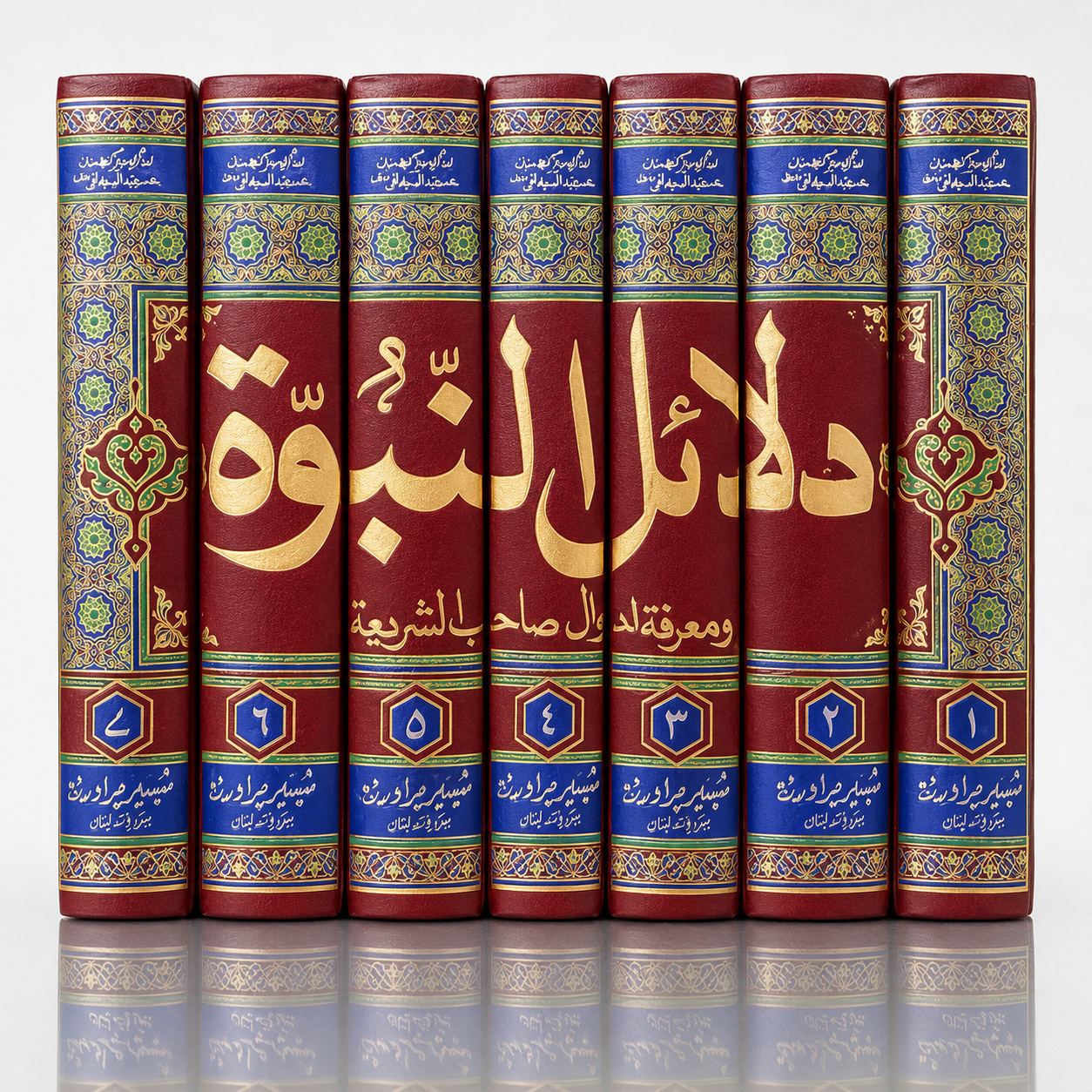
Original source of the book:
دلائل النبوة للبيهقي
Dala’il al-Nubuwwah by Imam al-Bayhaqi
Reference:
Volume 2, page 390
Narrator:
Abu Sa‘id al-Khudri RA
Muhaddith:
Al-Bayhaqi
Online verification link:
Dorar:
GreatTafsirs, through the quotation of al-Suyuti in al-Durr al-Manthur:
Note on the excerpt:
This hadith is very long. In this part, I am not copying the entire hadith. I am only quoting the part related to the story of the Prophet SAW informing Quraysh about the trade caravan, then the appearance of a mushrik man who claimed to be the most knowledgeable about Baitul Maqdis. That man asked him about its structure, its form and its nearness to the mountain.
Brief takhrij:
This narration is also mentioned as being reported by al-Hakim no. 4087 and ‘Abd al-Razzaq no. 1769 with a similar wording in brief form.
Hadith status:
Al-Bayhaqi assessed this narration with the wording:
أمثل إسنادًا
Its meaning is “better in sanad” or “the best sanad” compared to other routes in this chapter. However, this wording is not the same as a ruling of sahih like Sahih al-Bukhari and Sahih Muslim. Therefore, it is safer to place this narration as an additional narration that has a better sanad compared to narrations of its kind, not as a primary proof standing on its own.
Note on the Arrangement of Contexts
Before entering the hadith excerpt, I need to first explain why the arrangement below begins directly with Context 26.
This hadith is very long because it narrates the journey of Isra’ and Mi‘raj from beginning to end. In my personal study, I divided this long hadith into 29 smaller contexts so that every part can be read in a more organised way. This division is not an original division in the book. It is my own study arrangement to make reading, verification and analysis easier.
For this article, I do not bring all 29 contexts because the topic being discussed is only related to the trade caravan, the mushrik witness and the appearance of Baitul Maqdis. Therefore, I only quote the parts that are truly related to this topic, namely Context 26 to Context 29.
Context 26 begins when the Prophet SAW was in Makkah in the morning and narrated the incident of Isra’ to Quraysh. Context 27 mentions the Prophet SAW informing them about the Quraysh trade caravan. Context 28 introduces a mushrik man who claimed to be the most knowledgeable about Baitul Maqdis. Context 29 then mentions how Baitul Maqdis was made visible to the Prophet SAW so that he could answer the man’s questions.
Therefore, do not be confused when the excerpt below begins directly with Context 26. The earlier parts do exist in this long hadith, but they are not quoted here because they are not directly related to the focus of this article. Anyone who wants to read the entire hadith may refer to the online links provided or open the physical copy of Dala’il al-Nubuwwah at the stated volume and page.
Context 26: The Prophet SAW in Makkah in the Morning and Narrating the Wonders of Isra’
ثُمَّ أَصْبَحَ بِمَكَّةَ
Then he was in Makkah in the morning.
يُخْبِرُهُمْ بِالْعَجَائِبِ
He informed them about astonishing matters.
أَنِّي أَتَيْتُ الْبَارِحَةَ بَيْتَ الْمَقْدِسِ
“Indeed, I came to Baitul Maqdis last night.”
وَعُرِجَ بِي إِلَى السَّمَاءِ
“And I was raised to the heaven.”
وَرَأَيْتُ كَذَا وَرَأَيْتُ كَذَا
“And I saw such and such.”
فَقَالَ أَبُو جَهْلِ بْنُ هِشَامٍ
Then Abu Jahl bin Hisham said.
أَلَا تَعْجَبُونَ مِمَّا يَقُولُ مُحَمَّدٌ
“Are you not amazed at what Muhammad is saying?”
يَزْعُمُ أَنَّهُ أَتَى الْبَارِحَةَ بَيْتَ الْمَقْدِسِ
“He claims that he came to Baitul Maqdis last night.”
ثُمَّ أَصْبَحَ فِينَا
“Then he was among us in the morning.”
وَأَحَدُنَا يَضْرِبُ مَطِيَّتَهُ مُصْعِدَةً شَهْرًا وَمُنْقَلِبَةً شَهْرًا
“While one of us would drive his mount to go for a month and to return for a month.”
فَهَذَا مَسِيرَةُ شَهْرَيْنِ فِي لَيْلَةٍ وَاحِدَةٍ
“So this is a journey of two months in one night.”
Context 27: The Prophet SAW Informed Them About the Quraysh Caravan
قَالَ
He said.
فَأَخْبَرَهُمْ بِعِيرٍ لِقُرَيْشٍ
Then he informed them about a trade caravan belonging to Quraysh.
لَمَّا كَانَ فِي مَصْعَدِي
“When I was on my outward journey.”
Meaning, when he was on the journey going there.
رَأَيْتُهَا فِي مَكَانِ كَذَا وَكَذَا
“I saw it at such and such a place.”
وَأَنَّهَا نَفَرَتْ
“And indeed the caravan had been startled.”
فَلَمَّا رَجَعْتُ
“Then when I returned.”
رَأَيْتُهَا عِنْدَ الْعَقَبَةِ
“I saw it beside al-‘Aqabah.”
وَأَخْبَرَهُمْ بِكُلِّ رَجُلٍ
“And he informed them about every man.”
وَبَعِيرُهُ كَذَا وَكَذَا
“And his camel was such and such.”
وَمَتَاعُهُ كَذَا وَكَذَا
“And his goods were such and such.”
فَقَالَ أَبُو جَهْلٍ
Then Abu Jahl said.
يُخْبِرُنَا بِأَشْيَاءَ
“He is informing us about several matters.”
Context 28: The Mushrik Man Who Claimed to Know Baitul Maqdis Best
فَقَالَ رَجُلٌ مِنَ الْمُشْرِكِينَ
Then a man from among the mushrikin said.
أَنَا أَعْلَمُ النَّاسِ بِبَيْتِ الْمَقْدِسِ
“I am the most knowledgeable of people about Baitul Maqdis.”
وَكَيْفَ بِنَاؤُهُ
“And how is its structure.”
وَكَيْفَ هَيْئَتُهُ
“And how is its form.”
Or more strictly:
“And how is its state of appearance.”
وَكَيْفَ قُرْبُهُ مِنَ الْجَبَلِ
“And how is its nearness to the mountain.”
فَإِنْ يَكُنْ مُحَمَّدٌ صَادِقًا
“So if Muhammad is truthful.”
فَسَأُخْبِرُكُمْ
“Then I will inform you.”
وَإِنْ يَكُنْ كَاذِبًا
“And if he is lying.”
فَسَأُخْبِرُكُمْ
“Then I will inform you.”
فَجَاءَهُ ذَلِكَ الْمُشْرِكُ
Then that mushrik man came to him.
فَقَالَ
Then he said.
يَا مُحَمَّدُ
“O Muhammad.”
أَنَا أَعْلَمُ النَّاسِ بِبَيْتِ الْمَقْدِسِ
“I am the most knowledgeable of people about Baitul Maqdis.”
فَأَخْبِرْنِي
“So inform me.”
كَيْفَ بِنَاؤُهُ
“How is its structure.”
وَكَيْفَ هَيْئَتُهُ
“And how is its form.”
Or:
“And how is its state of appearance.”
وَكَيْفَ قُرْبُهُ مِنَ الْجَبَلِ
“And how is its nearness to the mountain?”
Note:
The word بِنَاؤُهُ refers to a building, structure or constructed physical arrangement.
The word هَيْئَتُهُ is broader than structure. It refers to appearance, state of form, outward presentation or visible external arrangement.
The phrase قُرْبُهُ مِنَ الْجَبَلِ is very important because it brings in a geographical element. The mushrik man did not only ask about the building, but also about the relationship of Baitul Maqdis’ location with the mountain.
Context 29: Baitul Maqdis Was Made Visible to the Prophet SAW and the Man Affirmed It
قَالَ
He said.
فَرُفِعَ لِرَسُولِ اللَّهِ صَلَّى اللَّهُ عَلَيْهِ وَسَلَّمَ بَيْتُ الْمَقْدِسِ مِنْ مَقْعَدِهِ
Then Baitul Maqdis was made visible to the Messenger of Allah SAW from where he was seated.
فَنَظَرَ إِلَيْهِ
Then he looked at it.
كَنَظَرِ أَحَدِنَا إِلَى بَيْتِهِ
Like the gaze of one of us at his own house.
بِنَاؤُهُ كَذَا وَكَذَا
“Its structure is such and such.”
وَهَيْئَتُهُ كَذَا وَكَذَا
“Its form is such and such.”
Or more strictly:
“Its state of appearance is such and such.”
وَقُرْبُهُ مِنَ الْجَبَلِ كَذَا وَكَذَا
“And its nearness to the mountain is such and such.”
فَقَالَ الْآخَرُ
Then that man said.
صَدَقْتَ
“You have spoken the truth.”
فَرَجَعَ إِلَى الصَّحَابَةِ
Then he returned to his associates.
The meaning in this context:
He returned to his group or his associates, not to the Companions of the Prophet SAW.
فَقَالَ
Then he said.
صَدَقَ مُحَمَّدٌ فِيمَا قَالَ
“Muhammad has spoken the truth in what he said.”
أَوْ نَحْوًا مِنْ هَذَا الْكَلَامِ
Or wording similar to this statement.
Note:
The phrase كَنَظَرِ أَحَدِنَا إِلَى بَيْتِهِ shows that Baitul Maqdis was displayed to the Prophet SAW with great clarity, like a person looking at his own house.
Closing
The narration above does not give us the full appearance of Baitul Maqdis. It does not preserve the measurements of the building, it does not mention the name of the mountain and it does not provide a complete description of the place. What this narration gives is only the form of the test that took place, namely the trade caravan as a means of verification, the mushrik man as the tester and the three matters asked about Baitul Maqdis: its structure, its form and its nearness to the mountain.
Therefore, it must not be read as though later narrations will certainly provide the full appearance of Baitul Maqdis. Based on the narration we are currently holding, that complete information does not exist in the form of a detailed list. What exists are indicators that must be read carefully.
This narration remains important not because it gives a full map of Baitul Maqdis, but because it shows how the test against the report of Isra’ moved from mockery over distance, to verification through the caravan, then to questions about the structure, form and nearness of Baitul Maqdis to the mountain.

Reply to: